De novo
A new branch experience worth having
This brief is for branch transformation directors planning a new branch. Opening one lets you decide every detail on purpose: who greets people, what they see, and what your staff say. We follow one customer through a new SimFinancial branch in our Branch Experience Simulator (BXS) and show the choices that, in our experience, shape how they feel about it. SimFinancial is our fictional bank, and the $300 offer and all settings are illustrative.
Why the details of a new branch matter
A customer decides how they feel about a branch within a few minutes of walking in. In our experience, they rarely remember the building. They remember whether someone greeted them, whether the message was clear, and whether the staff could answer their questions. These details are affordable to get right before opening and expensive to fix afterwards.
BXS is our simulator of a working branch. Simulated customers, which we call synths, move through it, and each one carries a score for how the visit is going, called BXI. Because every detail below can be set in BXS, you can see its effect on customers before you build, staff, or price your branch.
One customer's visit to the SimFinancial branch
Follow one customer: someone new in town who needs a checking account. They have not banked with SimFinancial before, and they have a few other banks to choose from.
The customer sees the offer before they park
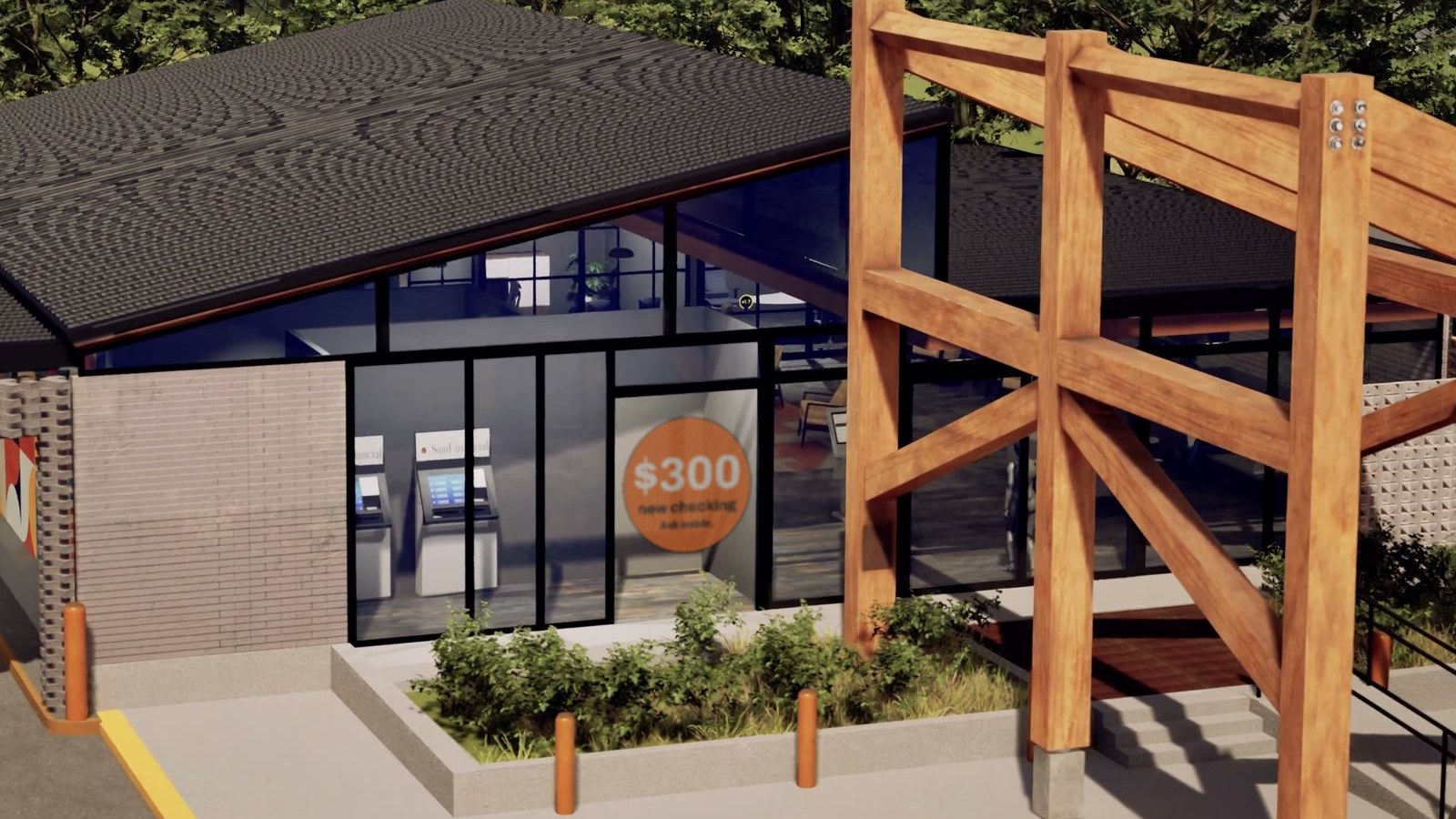
Pulling into the lot, the customer sees one offer on the front glass: a $300 bonus for opening a checking account. It answers the question they came with before they have left the car.
The drive-through tells them to come inside
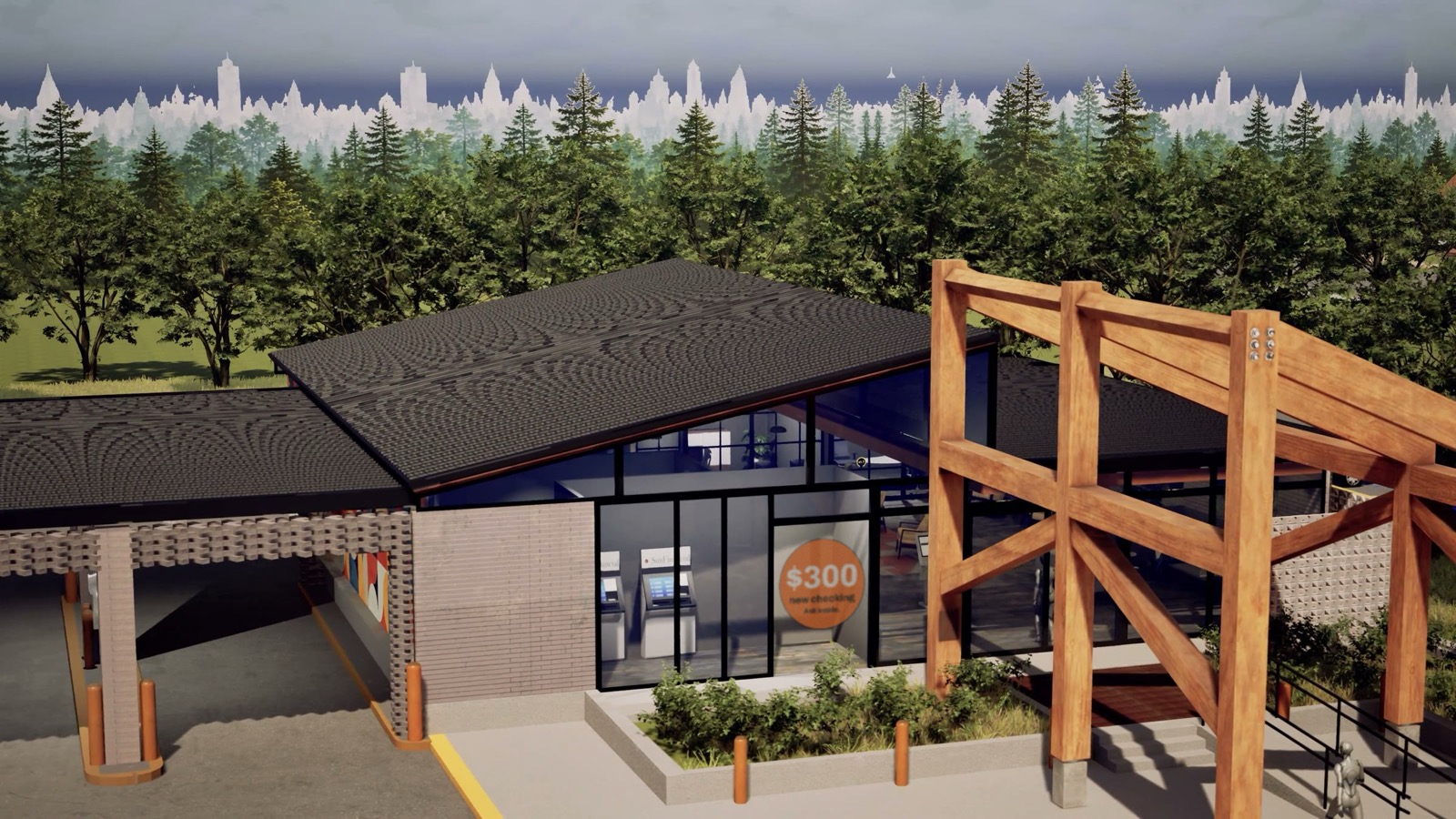
Driving past the drive-through, the customer sees an ATM and a night deposit box, but no teller window. The ATM's screen shows the same offer while it waits. Opening an account means talking to someone, so the customer parks and walks in.
Someone greets them within seconds
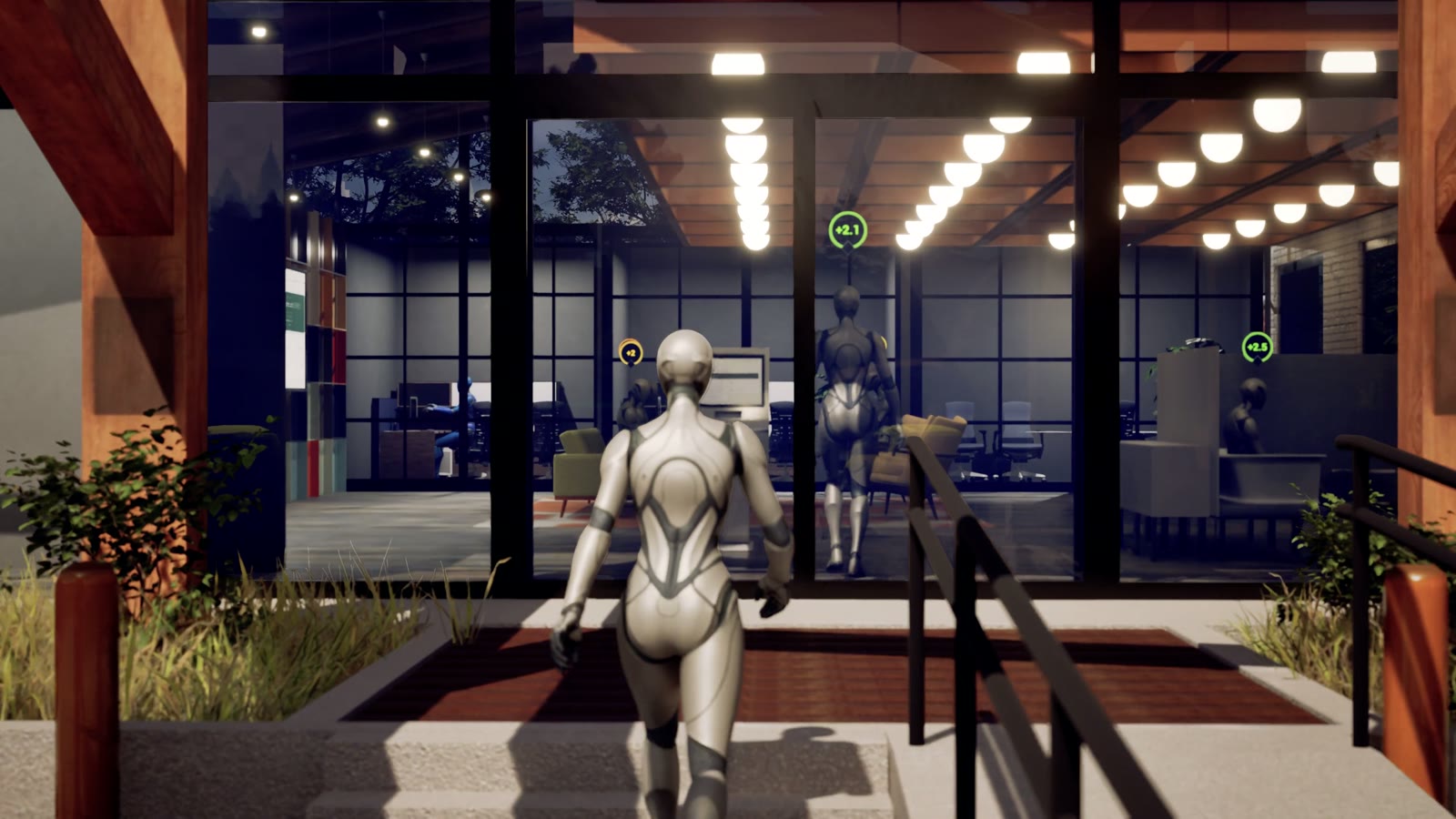
Inside the door, a lobby host greets the customer, asks what brings them in, and offers to show them around. The customer does not have to work out where to go or whom to ask.
They see the offer again, and their question is answered
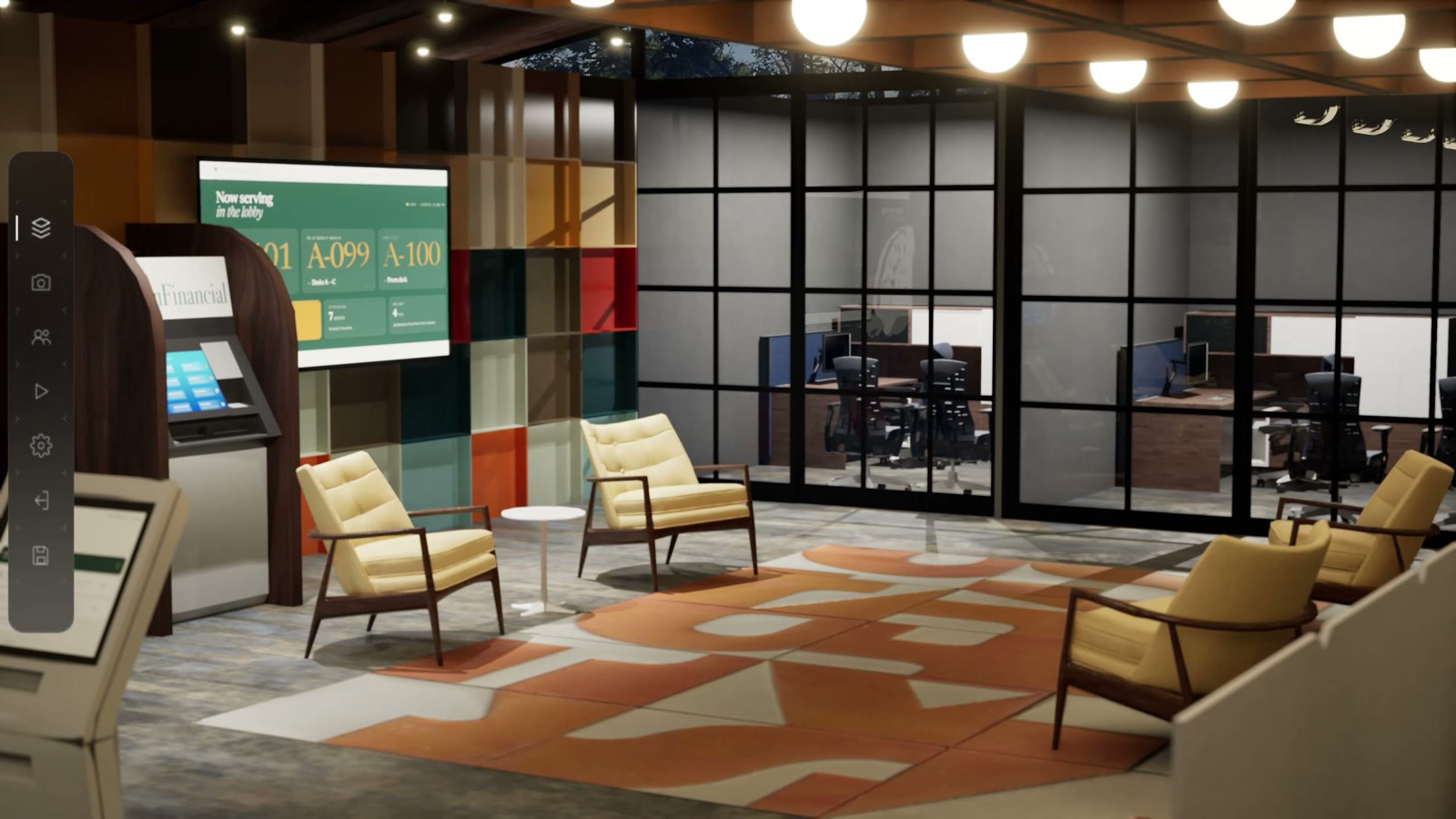
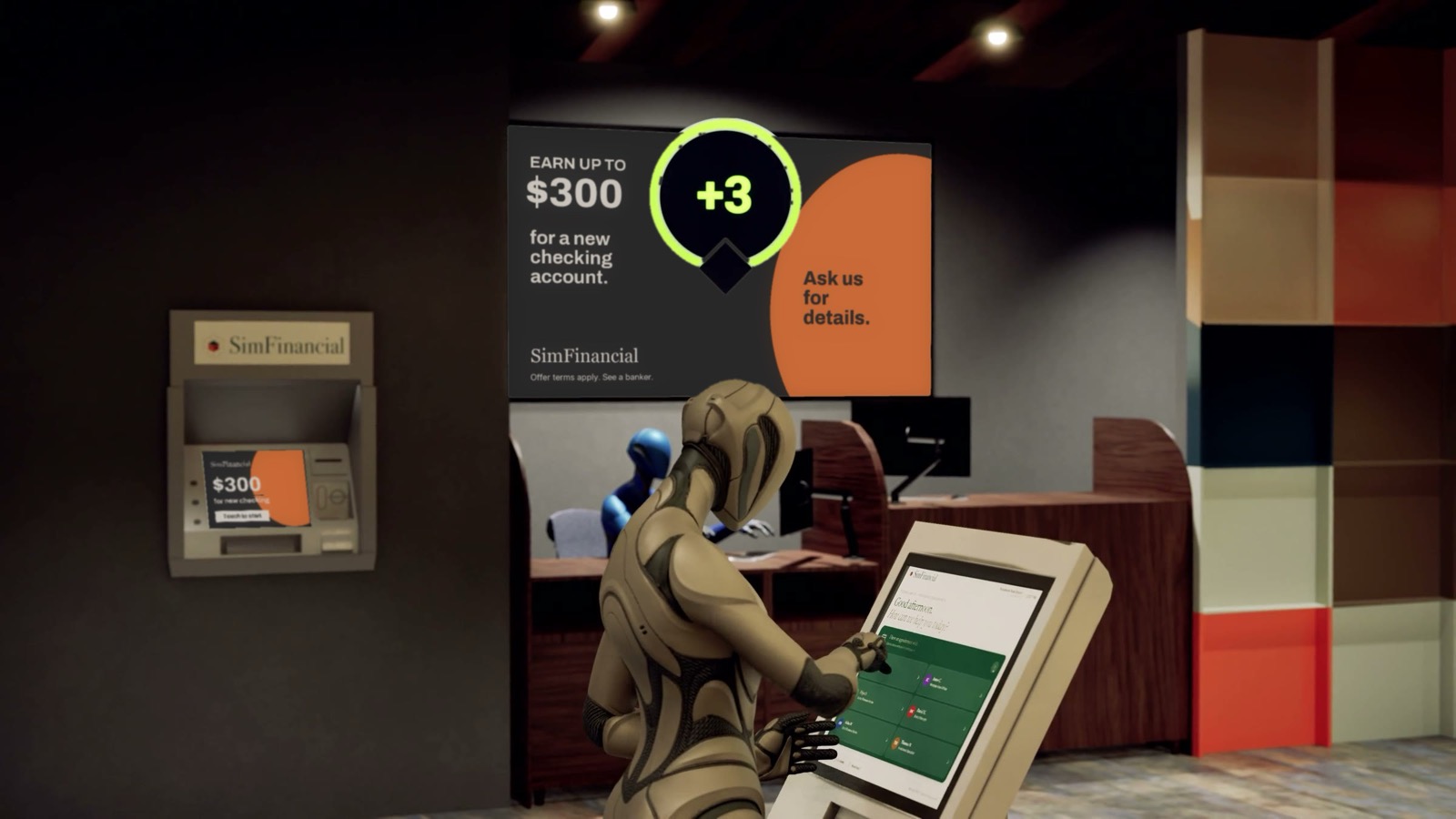
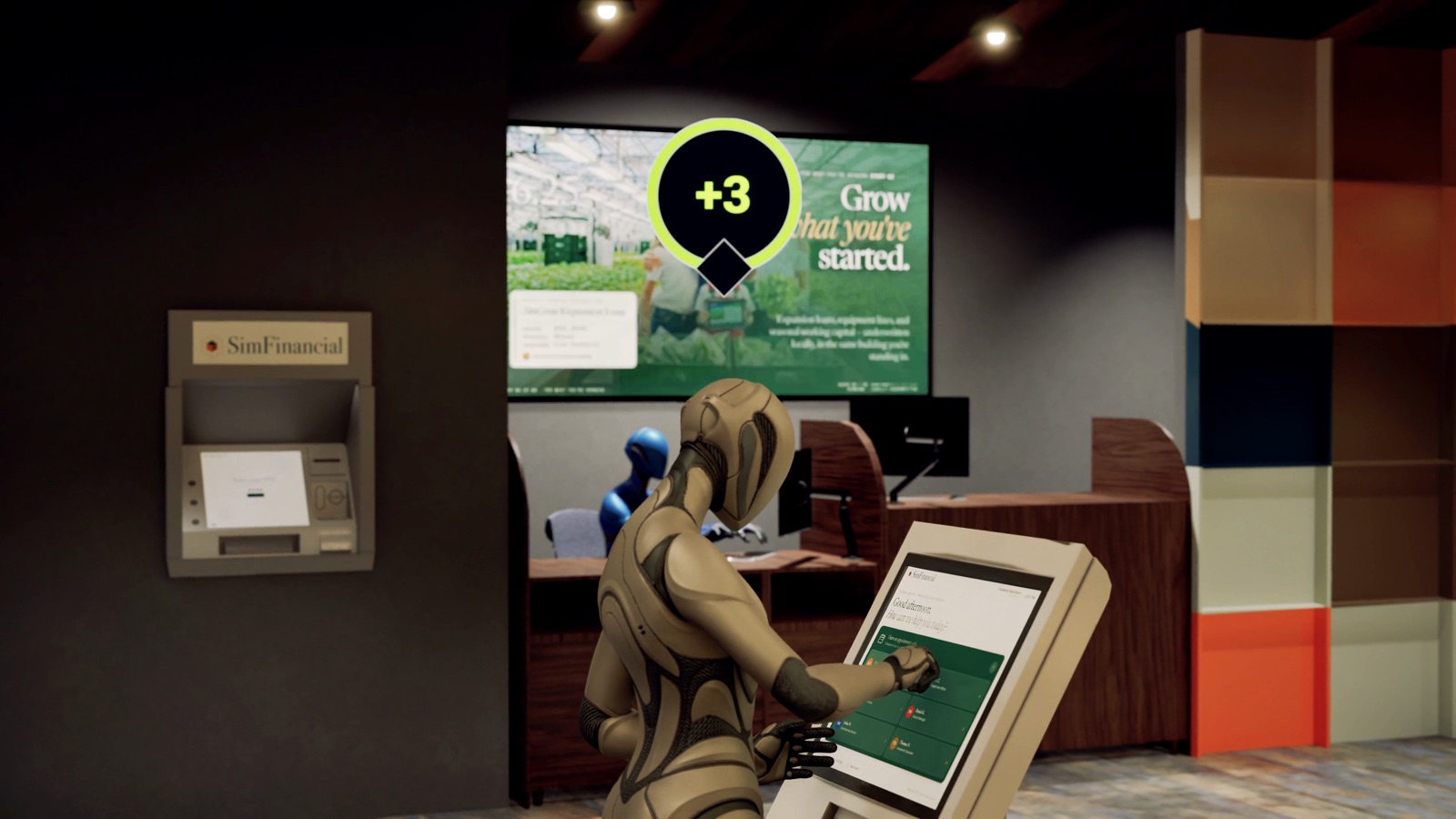
Passing the ATM corner, the customer sees the offer on the ATM and on the wall screen, and asks about it. The host answers in one sentence and asks whether they are moving their everyday banking or starting fresh. The offer has done its job: it started a conversation.
The wait is short, and they know how long it is
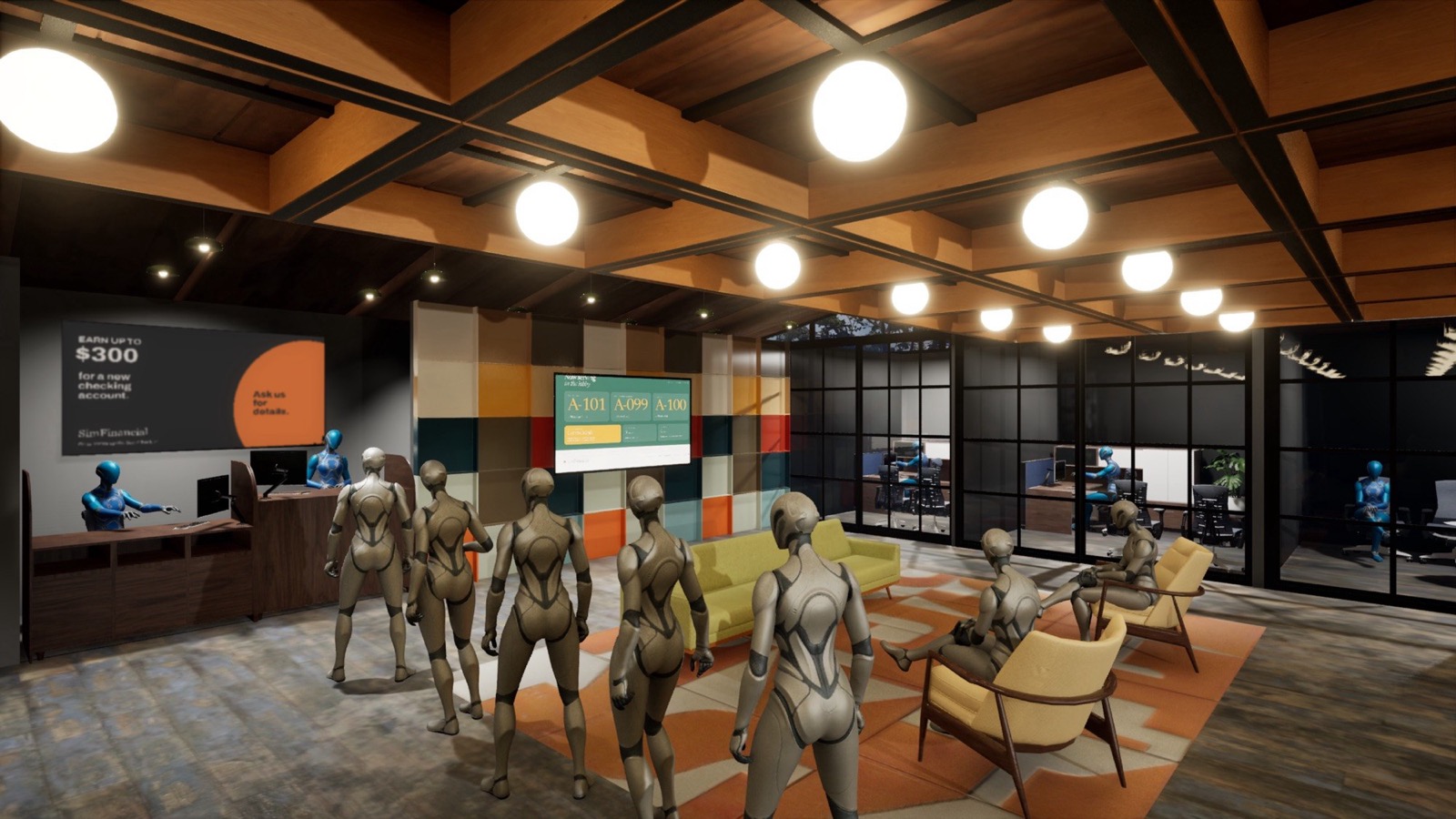
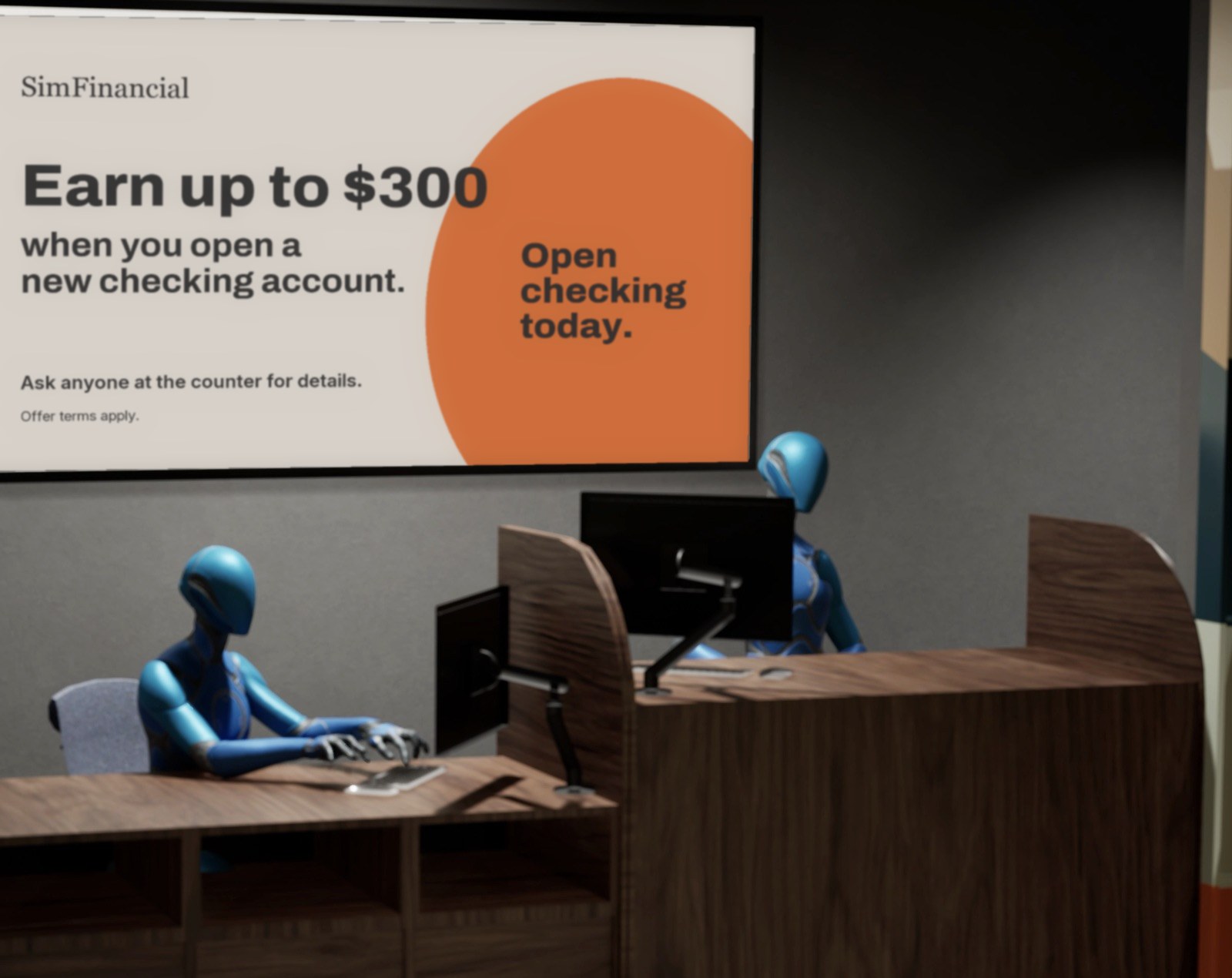
The customer sits in the lounge while a banker finishes with someone else. The line screen shows their place, coffee is offered, and the offer runs above the teller line. A wait they can see is a wait they can accept.
They are introduced by name, and the door closes
The host walks the customer to an office and introduces the banker by name. The door closes, and the customer can talk about money in private. The aim is to open the account in one visit.
They leave with an umbrella
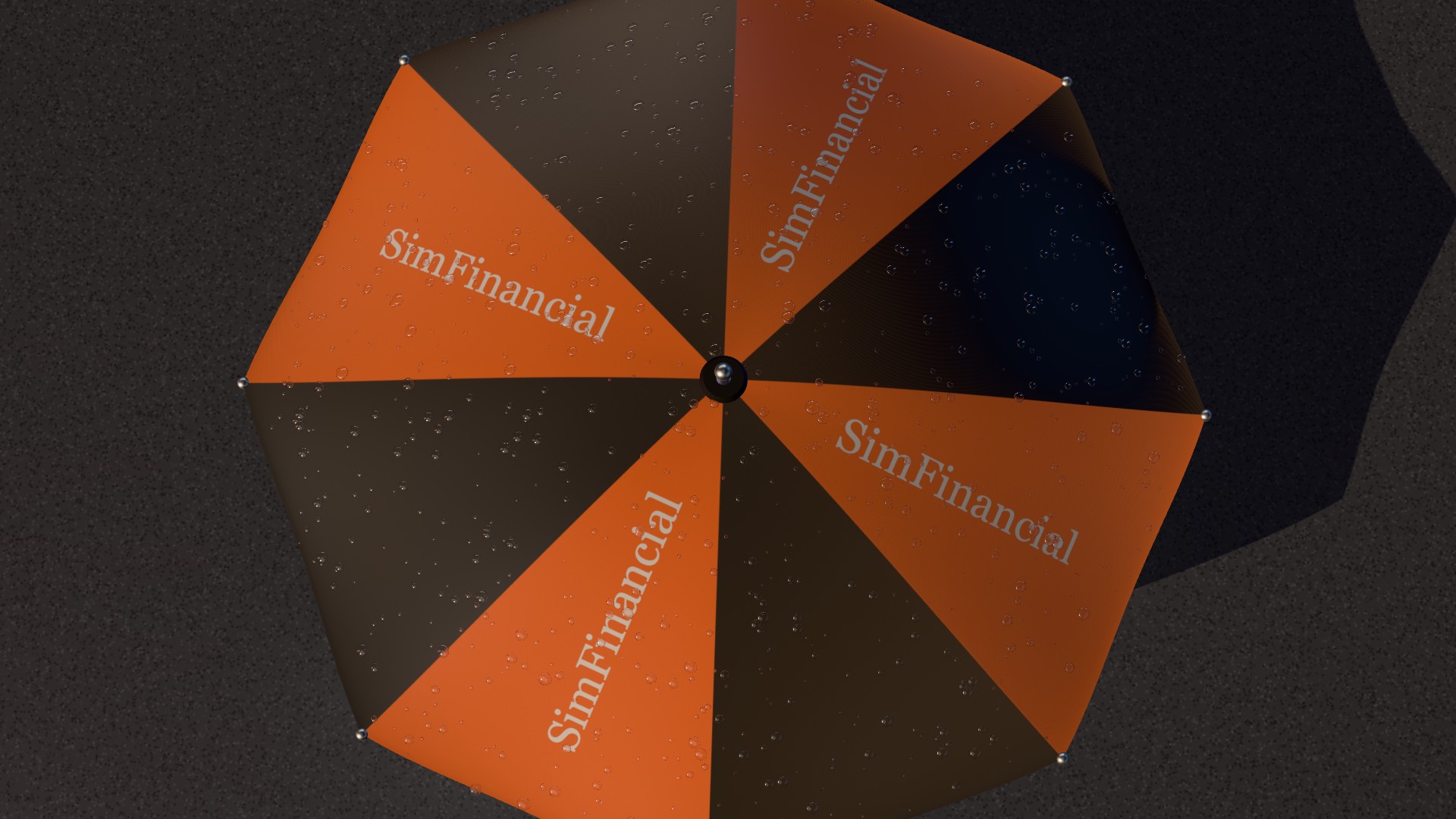
It has started to rain. On the way out, the host hands the customer a branded umbrella from the stand by the door. It is a small touch, and the staff know exactly why it is there: it is the last thing the customer takes with them.
What we set in BXS
We group the settings into mixes: the staffing, channel, ATM, tech, product, and furniture and fixtures choices that together make a branch. Each choice in the customer's visit is a setting in the simulator, so you can see how a synth responds to the branch you designed.
| Choice in the branch | Setting in BXS |
|---|---|
| Drive-up with an ATM and night deposit only | Channel mix: no drive-up teller; drive-up visits go to the ATM or come inside |
| A host greets and guides each visitor | Staffing mix: a dedicated host role at the door, separate from tellers and bankers |
| The manager is sometimes away | Staffing mix: some days run without the manager |
| Offices with doors, no open meeting area | Furniture and fixtures mix: private offices only |
| Screens only where people wait | Tech mix: screens in the lounge and by the ATM, none at desks |
| One offer, seen at every stop | Product mix: a single lead offer on every sign and screen |
| ATMs show the offer between transactions | ATM mix: attract screens carry the lead offer, inside and at the drive-up |
| Launch pricing for the new branch | Product mix: lower minimums than the rest of the footprint, with an end date |
| Staff trained on the purpose of every detail | Experience: staff readiness shapes each synth's BXI at every contact |
What a branch transformation director should decide first
The choices you make before opening day set how a new branch starts. These are the ones we would settle first.
- Invest in people before buildout. In our experience, customers remember the staff long after they forget the furniture. Budget for hiring and training first.
- Make welcoming visitors someone's job. A dedicated host is designed to turn a walk-in into a conversation. Give the role clear expectations of its own.
- Give every detail a reason your staff can explain. Write down the purpose of each touch and teach it, so the branch feels intentional.
- Lead with one offer, everywhere. One message on the window, on the ATM's screen, and at the teller line is easy to remember. Prepare your staff to answer the questions it raises.
- Treat your ATMs as a place to advertise. Your ATM screens reach people who are already standing at the machine. Put the lead offer there, inside and at the drive-up.
- Match the drive-up to how customers use it. An ATM and a night deposit box can replace a drive-up teller and let staff focus on the lobby.
- Choose closed offices or open space deliberately. Doors give privacy for advice but hide bankers from people waiting. Decide which matters more to your customers.
- Put screens only where people wait. A few well-placed screens can carry the message. More screens add cost, so test how many you need in BXS.
- Plan launch pricing with an end date. Lower minimums give staff a reason to start a conversation. Decide when they end and how they compare with your other branches.
- Train the team to run without the manager. The experience should never depend on one person being in the building.
You can test each of these choices in BXS first, so your bank opens a branch whose mix you have already tested on simulated customers. SimFinancial, its offer, and its settings are illustrative.